
There’s nothing quite like a Casper summer evening spent grilling burgers while the kids run through the sprinkler and the dog chases after them. But that idyllic scene can turn stressful fast when wasps start circling the patio. These stinging insects aren’t just a nuisance, they pose real risks to the youngest and furriest members of your family.
We’ve seen countless Casper homeowners deal with wasp problems that escalate quickly once temperatures rise. And while a single wasp might not seem like a big deal, the threat multiplies when you’re dealing with curious toddlers who don’t know to stay away, or pets who think anything that flies is worth chasing. In this guide, we’ll walk you through everything you need to know about keeping wasps at bay in your backyard, from understanding why they’re so common here to practical steps for protecting your loved ones.
Why Wasps Are Common in Casper During Warm Months
Casper’s climate creates near-perfect conditions for wasp populations to thrive from late spring through early fall. Our warm, dry summers provide the exact environment these insects need to build nests and hunt for food. And with the North Platte River and surrounding irrigation adding just enough moisture to the landscape, wasps find plenty of water sources to sustain their colonies.
Wasp activity typically picks up in May and peaks between July and September. During this time, colonies that started small in spring have grown to their maximum size, sometimes housing hundreds or even thousands of individuals. That’s when homeowners notice them most: buzzing around outdoor meals, hovering near trash cans, and investigating anything sweet.
What many folks don’t realize is that wasps are actually beneficial in some ways. They’re predators that eat other insects, including many garden pests. But that’s cold comfort when you’re trying to enjoy your backyard and a yellow jacket keeps dive-bombing your lemonade. The reality is, wasps become aggressive when defending their nests or competing for food sources, and that aggression is what puts kids and pets at risk.
Casper backyards offer wasps exactly what they’re looking for: sheltered spots for nesting, easy access to food (especially if you’re grilling or leaving pet food outside), and plenty of flowering plants. Understanding this is the first step toward making your property less attractive to them.
Identifying Wasp Nests in Your Backyard
Finding a wasp nest before someone stumbles into it is crucial for backyard safety. Wasps aren’t always obvious about where they set up shop, so regular inspections of your property during warm months can save you and your family from painful encounters.
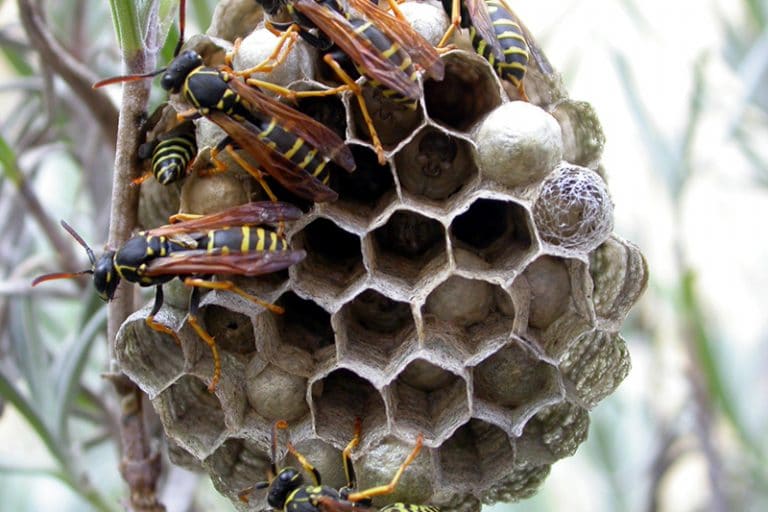
Wasp nests vary in appearance depending on the species. Paper wasps build open, umbrella-shaped nests that look like grayish honeycomb structures. Yellow jackets often nest underground or in enclosed spaces, making them harder to spot but more dangerous when accidentally disturbed. Bald-faced hornets create those large, football-shaped nests you might see hanging from tree branches or tucked under roof overhangs.
The key to early detection is watching wasp flight patterns. If you notice several wasps repeatedly flying to and from the same spot, there’s likely a nest nearby. Pay attention to areas where wasps seem to disappear into structures or the ground, that’s usually a telltale sign.
Common Nesting Locations
Wasps are opportunistic when it comes to real estate. In Casper backyards, we commonly find nests in these locations:
- Under eaves and roof overhangs – Protected from rain and wind, these spots are wasp favorites
- Inside grills and outdoor furniture – Especially if they’ve been sitting unused for a while
- In shrubs and hedges – Dense vegetation provides shelter and camouflage
- Underground burrows – Yellow jackets love abandoned rodent holes in lawns
- Play structures and sheds – Any hollow space is fair game
- Behind shutters and siding – Small gaps in your home’s exterior invite trouble
Make it a habit to check these areas every few weeks during summer. A small nest spotted early is much easier to deal with than an established colony with hundreds of defensive workers.
Risks Wasps Pose to Children and Pets
Kids and pets face higher risks from wasps than adults do, and it’s not just because they’re more likely to accidentally disturb a nest. Their smaller bodies, unpredictable behavior, and inability to understand the danger all contribute to why wasp encounters can turn serious quickly.
Children, especially toddlers and young kids, often don’t recognize the warning signs that a wasp is agitated. They might swat at one, step on a ground nest while playing, or reach toward a nest out of curiosity. And because they’re smaller, a sting delivers a proportionally larger dose of venom relative to their body weight.
Pets, particularly dogs, have their own set of problems. Many dogs instinctively snap at or chase flying insects, which is exactly the wrong response to a wasp. Cats might bat at them with their paws. Either way, the result is often multiple stings to the face, mouth, or paws. We’ve heard from Casper pet owners whose dogs got stung inside the mouth after trying to eat a wasp, causing dangerous swelling that required emergency veterinary care.
Allergic Reactions and Multiple Stings
The most serious concern with wasp stings is the potential for allergic reactions. While most stings result in localized pain, swelling, and redness that resolve within a day or two, some individuals experience severe allergic reactions called anaphylaxis.
Signs of a serious allergic reaction include:
- Difficulty breathing or wheezing
- Swelling of the face, throat, or tongue
- Rapid pulse or dizziness
- Hives spreading beyond the sting site
- Nausea, vomiting, or stomach cramps
If your child or pet shows any of these symptoms after a sting, seek emergency medical or veterinary care immediately. Anaphylaxis can be life-threatening without prompt treatment.
Multiple stings present another danger, even in individuals without allergies. Unlike honeybees, wasps can sting repeatedly. A child who disturbs a nest could receive dozens of stings before getting away. The cumulative venom from multiple stings can cause serious reactions including fever, muscle breakdown, and kidney problems, even in people who aren’t allergic.
This is exactly why prevention matters so much. The best way to protect your family is to keep wasps from establishing themselves in your backyard in the first place.
Preventive Measures to Keep Wasps Away
Prevention is always easier than dealing with an established wasp problem. By making your backyard less appealing to these insects, you can significantly reduce the chances of dangerous encounters. Here’s how we recommend approaching wasp prevention around your Casper home.
Managing Food and Trash Outdoors
Wasps are drawn to protein in early summer (when they’re feeding larvae) and sugary foods in late summer (when they’re building energy reserves). Managing both types of attractants is essential.
For outdoor meals:
- Keep food covered until you’re ready to eat
- Clean up spills immediately, especially sugary drinks
- Use cups with lids for beverages, wasps have drowned in open sodas and then stung people who took a sip
- Bring leftovers inside promptly after eating
For trash management:
- Use garbage cans with tight-fitting lids
- Rinse recyclables before putting them in bins
- Keep bins away from play areas and patios
- Empty outdoor trash regularly, especially after barbecues
For pet owners:
- Don’t leave pet food outside longer than necessary
- Clean food and water bowls daily
- Pick up fallen fruit from trees if you have them, wasps love fermented fruit
Landscaping Tips to Deter Wasps
Your yard’s design plays a bigger role in wasp attraction than you might think. A few strategic choices can make your property less hospitable to these pests.
Plant selection matters. While wasps visit many flowering plants, they’re particularly attracted to sweet-smelling varieties. Consider planting wasp-deterrent herbs like spearmint, thyme, eucalyptus, and citronella near patios and play areas. These won’t eliminate wasps entirely, but they can help discourage them from hanging around.
Maintain your landscape. Overgrown shrubs and dense hedges provide perfect nesting spots. Keep vegetation trimmed, especially near the house and outdoor living areas. Fill in ground holes that could become yellow jacket nests, including old rodent burrows.
Reduce water sources. Fix leaky outdoor faucets and don’t let water collect in plant saucers, toys, or other containers. Wasps need water just like any other creature, and eliminating easy access to it makes your yard less attractive.
Seal entry points. Inspect your home’s exterior for gaps around windows, doors, vents, and siding. Wasps will nest inside wall voids if they can find a way in. Caulk small gaps and use hardware cloth to cover larger openings.
What to Do If You Encounter a Wasp Nest
So you’ve found a nest. Now what? Your response depends on the nest’s size, location, and how close it is to where your family spends time.
Small nests in low-traffic areas might be safely left alone until fall, when the colony dies off naturally. But that’s rarely the case when kids and pets are involved. Most of the time, nests near play areas, patios, or high-traffic zones need to be removed.
What NOT to do:
- Don’t spray a nest with a garden hose, this agitates wasps without killing them
- Don’t try to knock down a nest with a stick or broom
- Don’t attempt removal during the day when wasps are most active
- Don’t seal a nest entrance if the nest is inside a wall or structure (trapped wasps may chew their way into your home)
If you decide to handle a small, accessible nest yourself, do it at dusk or dawn when wasps are less active. Wear protective clothing covering all exposed skin. Use a commercial wasp spray from a safe distance, following all label directions. Even then, be prepared for wasps to emerge and be aggressive.
Honestly? We recommend calling professionals for most wasp nest removals, especially when children and pets are in the picture. The risk of multiple stings just isn’t worth it. At Best Pest Control, we’ll inspect the situation and provide the right remedy to protect your family. Our technicians have the equipment and experience to remove nests safely, whether they’re hanging from your eaves or hidden underground.
If someone does get stung while you’re dealing with (or discovering) a nest, move away from the area quickly and calmly. Running and swatting can provoke more stings. Once you’re at a safe distance, assess the sting and watch for signs of allergic reaction.
Teaching Kids and Training Pets to Stay Safe
Even with the best prevention efforts, your family will likely encounter wasps at some point during Casper summers. Teaching kids and training pets how to respond can prevent a minor encounter from becoming a medical emergency.
For children:
Start by teaching kids to recognize wasps and understand that they’re different from harmless insects like butterflies. Use age-appropriate explanations, young children can understand “wasps can give ouchies, so we stay calm and walk away.”
Key lessons to reinforce:
- Never swat at or try to catch wasps
- If a wasp lands on you, stay still and wait for it to fly away
- Walk away slowly if wasps are buzzing around, don’t run or scream
- Tell a grown-up right away if you see a nest or a lot of wasps
- Don’t drink from open cans or cups left outside without checking first
Practice these responses before wasp season hits. Role-playing can help younger kids remember what to do when they’re actually faced with a buzzing insect.
For pets:
Training pets to avoid wasps is trickier since you can’t exactly explain the danger to them. But there are steps you can take:
- Work on a solid “leave it” command that your dog will obey even when distracted
- Supervise outdoor time during peak wasp activity (warm afternoons)
- If your dog has a history of snapping at insects, consider keeping them on a leash in areas where you’ve seen wasp activity
- Check outdoor areas before letting pets out, especially early in the morning when wasps might be sluggish on the ground
For both kids and pets, knowing how to respond to a sting is just as important as prevention. Keep a basic first aid approach in mind: remove the stinger if present (wasps usually don’t leave stingers, but occasionally one breaks off), wash the area with soap and water, apply a cold compress, and monitor for allergic reactions. Have your pediatrician’s and veterinarian’s numbers handy, and know where the nearest emergency services are located.
Conclusion
Wasps don’t have to ruin your family’s enjoyment of warm Casper summers. With some awareness, preventive measures, and quick action when problems arise, you can keep your backyard safe for kids and pets alike.
The most important takeaways? Regularly inspect your property for nests, eliminate food and water sources that attract wasps, and teach your family how to respond calmly if they encounter these insects. And when you do find a nest, especially one near where your children play or your pets roam, don’t take unnecessary risks trying to handle it yourself.
At Best Pest Control, we understand that wasps are more than just a nuisance when you’ve got little ones and furry family members to protect. We’re a local, family-owned company with decades of experience dealing with the pests common to Wyoming, and we offer service guarantees to give you peace of mind. Whether you have an active wasp problem or just want to take preventive steps, we’re here to help protect your home and family.
Don’t wait until someone gets stung. If you’ve spotted wasp activity in your Casper backyard, give us a call and let’s get your outdoor spaces safe again.